
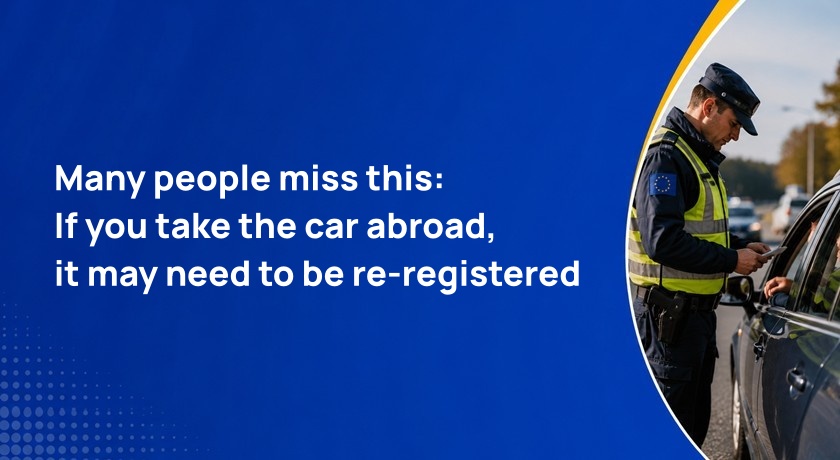
Driving a vehicle abroad may seem simple. The vehicle is registered, insured and approved in an EU country. But during an inspection, the situation can quickly become more complicated.
It often comes down to two things: where the vehicle is actually being used, and whether the driver can show that he or she has the right to drive it.
If a vehicle is registered in one country but used for a longer period in another, authorities may in some cases require it to be re-registered there. This can mean local registration, new fees and, ultimately, new registration plates.
At the same time, the driver may need to show why he or she is driving the vehicle. This is especially relevant when the vehicle is not owned by the driver. It may involve an employer’s vehicle, a company car, a leased vehicle, a rental car or a privately borrowed vehicle.
AMVI card*
AMVI Card* – AMVI Card is an authorisation document that stands for Authorisation for a Third Party to Use a Motor Vehicle Internationally. It makes it possible to quickly verify ownership, right of use and other relevant vehicle information during travel and inspections.
Authorisation can be crucial
At a roadside inspection, showing the vehicle registration certificate may not always be enough.
If you are driving a vehicle owned by your employer, a company, a leasing company, a rental company or another private individual, you may need to show authorisation, a power of attorney or other documentation proving that you have the right to use the vehicle.
The EU information portal Your Europe states that anyone driving a car that is not their own should be able to show that they have the right to use the vehicle. This becomes particularly important when travelling across borders and during inspections.
Employer vehicles and company cars
For employer-owned vehicles, the question of authorisation is particularly important. The driver is often not listed as the owner of the vehicle, while the vehicle may be used for work, travel or in several countries.
In such situations, a clear authorisation document can show who owns the vehicle, who is allowed to use it, for what period, and whether it may be used abroad.
This reduces the risk of misunderstandings during inspections and makes it easier to prove that the vehicle is being used with the owner’s approval.
Privately borrowed cars
For privately borrowed cars, the rules may vary from country to country.
Some countries, including Poland and Hungary, are often mentioned in connection with requirements for documentation showing that the driver has the right to use a car belonging to someone else.
This may, for example, involve a power of attorney or written authorisation from the owner.
Check before travelling
Anyone driving a vehicle abroad should always check the rules before travelling. This applies both to the country you are travelling to and the countries you pass through on the way.
The rules may differ depending on whether the vehicle is privately owned, company-owned, rented, leased or registered in another country.
They may involve requirements relating to registration, insurance, authorisation, power of attorney, proof of ownership, leasing documents, rental car documents or other papers showing that the vehicle may be used by the driver.
For anyone who wants to avoid problems, the advice is simple: check the rules in advance and make sure you have clear documentation showing that you have the right to drive the vehicle.